
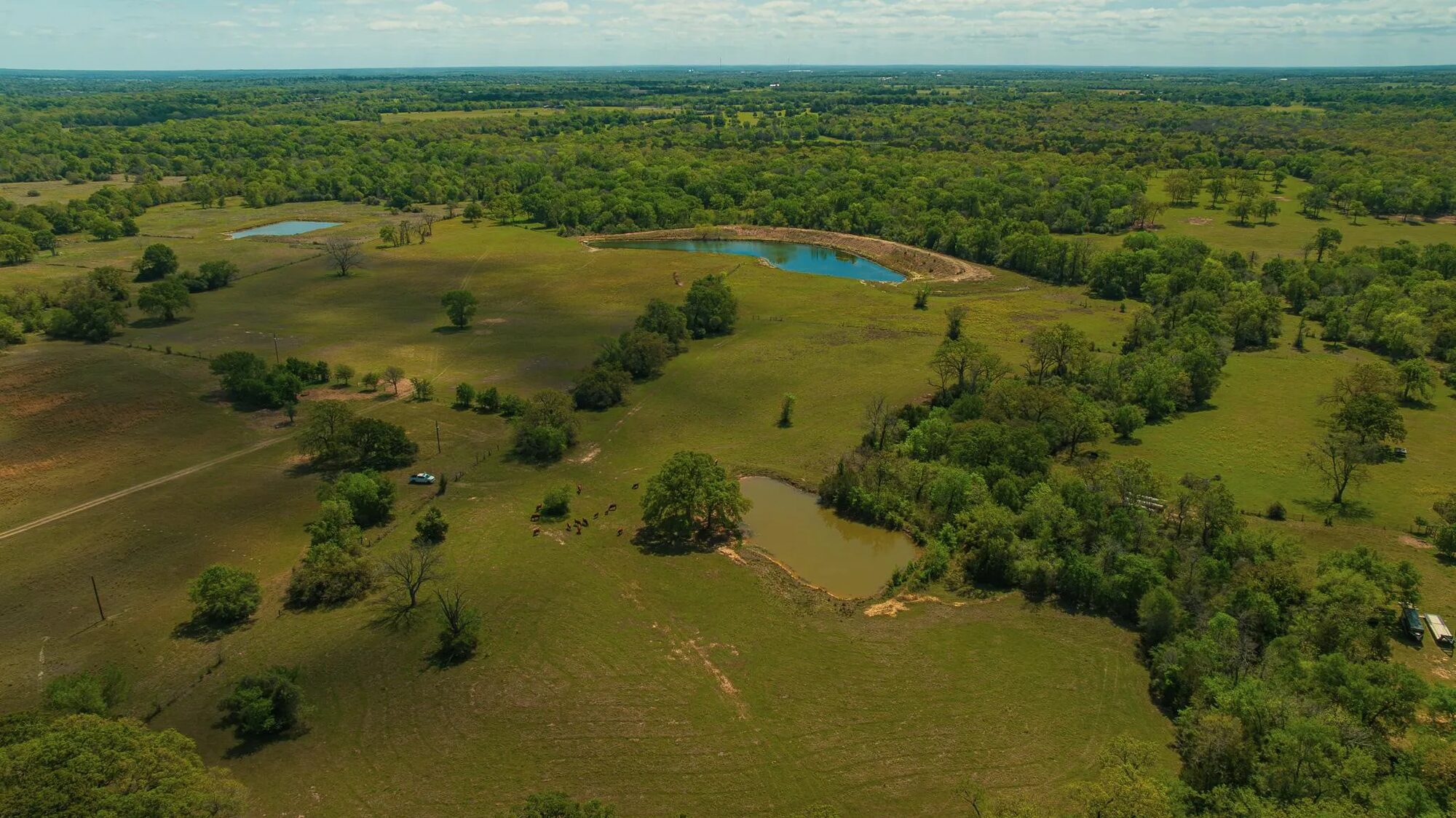
Buying Hunting Land in Burleson and Robertson Counties
The game you find here, what I weigh in a hunting tract, the Managed Lands Deer Program, what hunting leases tend to bring, and how to keep an ag valuation with wildlife management. Plain English, with the local rules.
Brazos Valley Living·Guides·Hunting Land
← Back to GuidesTo buy hunting land in Burleson or Robertson County, start with what you want to hunt, whitetail, hog, or dove, then judge the tract on water, cover, access, neighbors, and fencing. Confirm the property-tax valuation with the county appraisal district, and look at whether the land can join the Texas Parks and Wildlife Department Managed Lands Deer Program. If you want to hunt rather than ranch, you can often keep an open-space valuation by converting to wildlife management. Here is how I walk a buyer through it.
Why hunting land is its own kind of purchase
A lot of the land I show around Burleson and Robertson counties gets bought to hunt, not to farm or build on right away, and buying for hunting is a different exercise than buying a homesite. You are buying habitat, water, and access as much as acreage, and two tracts of the same size can hunt completely differently depending on cover, neighbors, and how the land has been managed. I want you to know what drives hunting quality here, how the property taxes work, and what programs exist before you make an offer. None of this is legal, tax, or wildlife-law advice. It is the lay of the land, so you know what to ask the appraisal district, Texas Parks and Wildlife, and your attorney.
What you can hunt around here
Burleson and Robertson counties sit in the Post Oak Savannah, a mix of oak woods, pasture, creek bottoms, and brush, and that habitat supports the usual Central Texas quarry. The common targets are white-tailed deer, feral hog, and dove. Deer and dove are regulated game: Texas Parks and Wildlife Department (TPWD) sets the seasons, zones, and bag limits, and those change from year to year, so I always point buyers to the current TPWD Outdoor Annual for the exact dates and limits that apply to a given county. As a rule of thumb, the general white-tailed deer season runs through the late fall and winter, dove opens in early September. Both counties fall in TPWD's North deer zone, but confirm the current season and bag limit for the specific county before you hunt. Note that neither Burleson nor Robertson County currently has an open turkey season, so do not count on turkey here.
Feral hogs are the exception. TPWD does not classify the feral hog as a game animal, and on private land a person with a valid Texas hunting license can take them year-round with no bag limit. That makes hogs both an opportunity and a nuisance, and it is one of the first things I ask a seller about, because heavy hog pressure tells you something about the neighborhood and the habitat. Confirm the current hog rules with TPWD, since the details around licensing and methods can change.
What I weigh in a hunting tract
When I walk a hunting tract with a buyer, I look at a handful of things that drive how the land actually hunts, not just how it looks on a plat.
Water. Reliable water, a creek, a stock tank, a well, or a spring, holds game and shapes where animals move. In a dry stretch it can be the difference between a tract that hunts and one that does not.
Cover and food. Deer want a mix of cover to bed and browse in and open areas to feed. Heavy native brush, oak mast, and a few food plots or fields each play a part. A tract that is all open pasture or all closed canopy usually hunts worse than one with edges.
Access. Two kinds matter. Legal access, whether you have deeded frontage or an easement so you can actually get to the land, and physical access, whether you can move around the tract without spooking everything. I confirm access in writing before an offer, because a landlocked tract is a real problem.
Neighbors. What happens next door affects your hunting. Surrounding land in agriculture, in a wildlife co-op, or under low hunting pressure tends to help. I look at how the adjoining tracts are used and whether there is a wildlife management association in the area.
High fence versus low fence. Most land here is low fence, meaning deer move freely on and off. Some tracts are high fenced, which lets an owner manage a contained deer herd more intensively but costs more to build and maintain. Neither is better in the abstract. It depends on how you intend to hunt and manage, and I make sure you know which you are buying.
The Managed Lands Deer Program
If deer are your focus, it is worth knowing about TPWD's Managed Lands Deer Program (MLDP). It is a voluntary program for private land that gives enrolled landowners extended deer seasons and a tag-based harvest, in exchange for participating in sound deer and habitat management. There are two ways in.
The Harvest Option is the self-service path. You get an automated harvest recommendation and tags, and you do not have to perform habitat practices, collect population data, or work with a TPWD biologist. It is renewed each year, and TPWD enrolls it during a set window in late spring and summer.
The Conservation Option is the hands-on path. You work directly with a TPWD wildlife biologist who gives your ranch customized habitat and harvest recommendations, and in return you report certain deer data and complete specific habitat practices each year. Its enrollment window opens earlier in the spring. Both options are for white-tailed and, where present, mule deer, and both let you take advantage of longer seasons and liberalized harvest. I link the program below, and if a tract you are considering is already enrolled, I can find out which option and what that means for you.
What hunting leases tend to bring
Buyers often ask whether they can offset the cost of land by leasing the hunting rights, and the honest answer is that it depends heavily on the tract. Published Texas figures put per-acre hunting-lease rates across a very wide band, anywhere from roughly five dollars an acre on plain ground up to several hundred dollars an acre for prime, well-managed deer country, and leases are commonly priced per acre, per gun, or as a flat seasonal fee. I will not quote you a single rate, because the number turns on the game, the habitat, the access, and the management history. For real numbers, the Texas Chapter of the American Society of Farm Managers and Rural Appraisers publishes annual hunting-lease values in its Rural Land Value Trends report, and Texas A&M AgriLife is a good source for lease economics. One legal note: a Texas landowner who leases land for hunting generally must hold a hunting-lease license from TPWD, so factor that in.
Hunting and your ag valuation
Here is the part that ties hunting land to your tax bill. If a tract already carries a 1-d-1 open-space agricultural valuation but you would rather hunt and manage wildlife than run livestock, Texas lets you convert to a wildlife-management valuation and keep the same lower productivity value, without triggering a rollback, because the state treats wildlife management as an agricultural use. The standards live in Texas Tax Code Section 23.521, and the term "wildlife management" is defined in Section 23.51(7). The catch is that the land has to have already qualified as open-space agricultural land (or timber land), so you cannot start cold with wildlife management on raw land.
To qualify, you actively manage for a sustaining population of native wildlife and perform at least three of seven approved practices: habitat control, erosion control, predator control, providing supplemental water, providing supplemental food, providing shelters, and making census counts. You file a wildlife-management plan, TPWD's Form PWD 885, with your county appraisal district, and you keep the practices going each year. The Texas Comptroller's Guidelines for Qualification of Agricultural Land in Wildlife Management Use (Form 96-354) spell out the requirements. I cover the underlying open-space valuation in detail in my ag exemption guide, and the appraisal district can tell you exactly what its current wildlife plan requires.
What I see go wrong
A few patterns come up. Buying a landlocked tract on a handshake about access, then finding the easement was never recorded. Assuming an open-space valuation carries over automatically at closing, when a new owner often has to reapply, so confirm the status with the appraisal district. Assuming wildlife management can start on bare land, when the tract first has to qualify as open-space ag land. Counting on a hunting-lease number someone quoted at the coffee shop, when rates swing widely by tract. And overlooking the high-fence-versus-low-fence question until after the offer, when it changes how you can manage deer. I try to catch all of these before you sign. If a hunting tract near Franklin, the Robertson County seat, or out toward Caldwell in Burleson County catches your eye, walk it with me and we will check these together.
Hunting land, answered
01 What can I hunt on land in Burleson and Robertson counties? +
These counties sit in the Post Oak Savannah, and the common quarry is white-tailed deer, feral hog, and dove. Feral hogs are not classified as game and, on private land with a hunting license, can be taken year-round with no bag limit. Deer and dove are regulated by Texas Parks and Wildlife with set seasons and bag limits, so check the current Outdoor Annual for your county before you hunt.
02 How much can I make leasing hunting rights in Texas? +
It varies widely with the game, habitat, and access. Published Texas figures put per-acre hunting leases anywhere from about five dollars to several hundred dollars an acre, and leases are often priced per acre, per gun, or as a flat seasonal fee. I will not quote a single rate, because it depends on the tract. The Texas Chapter of the American Society of Farm Managers and Rural Appraisers publishes annual hunting-lease values, and a landowner who leases hunting rights generally must hold a hunting-lease license from TPWD.
03 What is the Managed Lands Deer Program? +
It is a voluntary TPWD program for private land that offers extended deer seasons and tag-based harvest. It has two options. The Harvest Option is self-service, gives you a harvest recommendation and tags, and does not require habitat practices or a biologist. The Conservation Option pairs you with a TPWD biologist for ranch-specific recommendations and requires habitat work and deer-data reporting each year.
04 Can I keep my ag valuation if I just want to hunt the land? +
Often yes, through a wildlife-management valuation. If the tract already qualifies as open-space agricultural land, you can convert to wildlife-management use, keep the same productivity valuation, and avoid a rollback, because Texas treats wildlife management as an agricultural use under Tax Code Section 23.521. You file a wildlife-management plan and actively perform at least three of seven approved practices each year. Confirm the current requirements with your county appraisal district, and see my ag exemption guide for the underlying valuation.
This guide is general information, not legal, tax, financial, or wildlife-law advice. Hunting regulations, program rules, county standards, and lease values change, and every tract is different. For your situation, confirm the current rules with Texas Parks and Wildlife Department, the Burleson or Robertson county appraisal district, and your attorney or tax professional. I am glad to point you to the right office.
Sources I used
- Managed Lands Deer Program, the two options (Harvest and Conservation), voluntary enrollment, extended seasons, tags, and that the Conservation Option requires a TPWD biologist and habitat practices: Texas Parks & Wildlife Department, Managed Lands Deer Program (MLDP).
- Seasons, zones, and bag limits for deer and dove, including confirmation that Burleson and Robertson have no open turkey season, set by county and zone and changing yearly: TPWD Outdoor Annual, Texas hunting and fishing regulations.
- Feral hog status and management (not classified as game, taken year-round on private land with a hunting license): TPWD, Feral Hogs in Texas. Confirm current licensing and method rules with TPWD.
- Hunting-lease range and structures (roughly five dollars to several hundred dollars per acre; per acre, per gun, or flat fee), as a published range rather than a quoted rate: Texas Farm Credit, Your Guide to the Texas Hunting Industry. For surveyed lease values, the Texas A&M Texas Real Estate Research Center and the Texas Chapter of the American Society of Farm Managers and Rural Appraisers Rural Land Value Trends report are the standard references.
- Hunting-lease license requirement for landowners who lease land for hunting: Texas A&M AgriLife, Texas Agriculture Law (hunting-lease license).
- Wildlife-management valuation: that it is treated as an agricultural use, that the land must have first qualified as open-space ag or timber land, and that the owner must perform at least three of seven practices (habitat control, erosion control, predator control, supplemental water, supplemental food, shelters, census counts): Texas Comptroller, Agricultural, Timberland and Wildlife Management Use Special Appraisal, with detail in the Comptroller's Guidelines for Qualification of Agricultural Land in Wildlife Management Use (Form 96-354). Standards are in Texas Tax Code §23.521 and the definition of "wildlife management" in §23.51(7).
- The wildlife-management plan form (PWD 885) filed with the county appraisal district: TPWD, Wildlife Management for Agricultural Tax Valuation.
- County appraisal districts for current local standards and valuation status: Burleson County Appraisal District and Robertson Central Appraisal District (Franklin, TX). Confirm any figure with the district before relying on it.
Looking at a hunting tract?
Tell me what you want to hunt and the tract you are considering, and I will check the access, the valuation status, and the deer-program options with the right offices before you make an offer.