
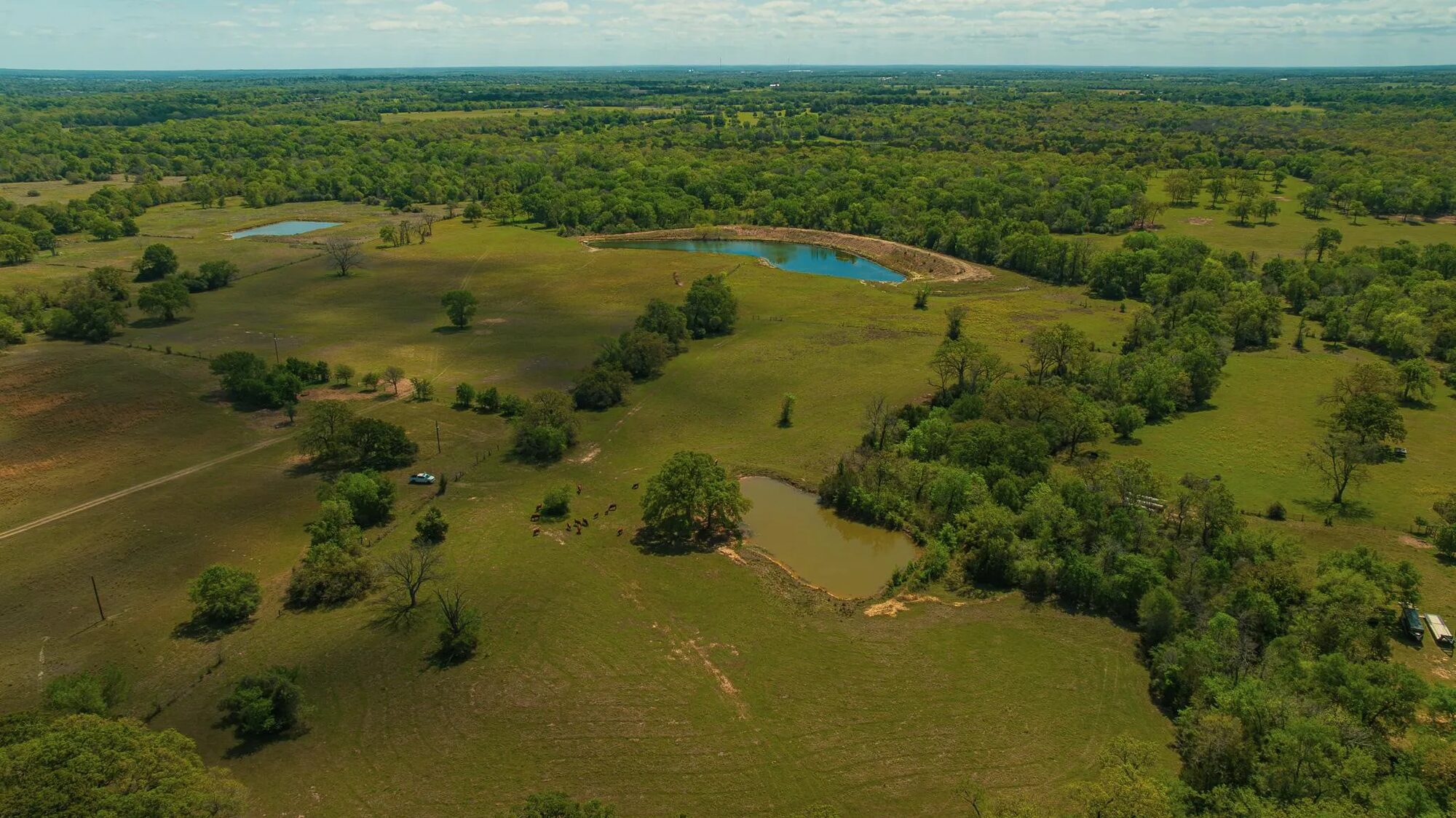
Rural Land Loans in Burleson & Brazos Counties
How financing works when the property is raw or unimproved land: down payment ranges, Farm Credit and bank lenders, seller financing, and where USDA Farm Service Agency programs fit. Plain English, with the local context.
Brazos Valley Living·Guides·Land Loans
← Back to GuidesFinancing raw or rural land is different from financing a house. Buyers often face higher down payments, shorter terms, and lenders that specialize in acreage. Farm Credit lenders, community banks, seller financing, and USDA Farm Service Agency programs can each fit different uses. I explain the differences below so you know what to ask before making an offer. This is general information, not lending advice. Ask a licensed lender for terms based on your land and finances.
Why I bring this up before the search, not after
A good share of the tracts I show around Burleson and Brazos counties are raw or lightly improved, no house, sometimes no utilities run to the site yet. I have watched a buyer find the right piece of land, then get surprised at how differently it finances compared to the house they grew up thinking a mortgage looked like. I would rather you hear the shape of it early. I am a REALTOR, not a lender, and nothing here is lending, legal, tax, or financial advice or a promise about rates, down payment, or approval. My goal is to help you ask a licensed lender the right questions before you write an offer, so the financing side does not slow down your closing.
How financing land differs from financing a house
A land loan is not underwritten the same way as a home mortgage. Texas Farm Credit's own guidance for first-time land buyers puts it plainly: the down payment for land financing typically begins at a minimum of around 20 percent, well above what many buyers expect from a residential loan. The interest rate structure looks different too. Rather than the familiar 30-year fixed home loan, a land loan's rate can be locked in for anywhere from 1 to 20 years, and Texas Farm Credit notes that rates on raw land will differ from conventional mortgage rates. The lenders set up for this, rural and agricultural lenders in particular, are used to underwriting acreage instead of a subdivision lot, which is part of why they show up so often in this guide.
Raw land, unimproved land, and improved land are not the same loan
Lenders treat land differently depending on what is already on it. Raw land, meaning no utilities, no road access built out, no structures, is generally viewed as the higher-risk end of the spectrum. First South Farm Credit, a Farm Credit System lender, explains the reasoning directly: raw land is often considered riskier, which means lenders may require a larger down payment or offer a shorter loan term. Land with utilities, road frontage, or an existing structure tends to underwrite more like a conventional purchase. Capital Farm Credit sorts its land lending by how the land will be used rather than by a single raw-versus-improved line: agricultural land for crop production or grazing, recreational land for hunting or fishing, and rural homesites, plus financing for improvements such as fencing, irrigation, or barns once you own the tract. Tell your lender up front whether the land is raw or already has utilities and access, since it changes what they can offer.
Farm Credit lenders, community banks, and where each tends to fit
The lenders I see finance raw acreage most often around here are part of the Farm Credit System, a nationwide network of borrower-owned agricultural lending cooperatives. Texas Farm Credit offers a Rural Real Estate loan with fixed and variable rate options, no maximum acreage limitation, and financing for farmland, ranches, dairies, orchards, vineyards, raw acreage, timber operations, and investment property. Capital Farm Credit describes typically financing about 80 percent of a land purchase, sometimes as high as 85 percent, with lower down payment requirements and no private mortgage insurance. For a smaller homesite or lot, Texas Farm Credit's partnership with Rural 1st advertises 15 percent down on a 15-year amortization or 20 percent down on a 20-year amortization, on tracts with at least 5 cleared acres outside city limits where the borrower intends to build. These are examples of lenders active in rural Texas, not endorsements or the only options. A conventional bank can still work, especially once land is improved, but many are more cautious about vacant acreage than a lender built for it. Compare a few and choose what fits your numbers.
USDA Farm Service Agency loans, for an actual farm or ranch
If the land will support a genuine farming or ranching operation, the USDA Farm Service Agency runs a separate set of programs worth asking about, distinct from the USDA Rural Development home loan I cover in my USDA loan FAQ. FSA's Direct Farm Ownership Loan can finance up to 100 percent of an eligible purchase, up to a maximum of $600,000, with a repayment term as long as 40 years. For beginning farmers and ranchers, and for minority and women applicants, FSA also offers a Down Payment Loan Program: the applicant contributes a minimum cash down payment of 5 percent of the purchase price, FSA finances 45 percent of the purchase price or appraised value up to a program ceiling that works out to a maximum FSA loan of $300,150, FSA's portion is repaid over 20 years, and any remaining financing from another lender needs at least a 30-year term. Combined, financing from FSA and every other creditor cannot exceed 95 percent of the purchase price. Eligibility turns on actually operating the farm, so confirm the details with your local FSA office. Texas A&M AgriLife Extension also publishes a general guide to financial assistance programs for ranchers and beginning farmers, worth a look alongside FSA's own materials.
Owner financing, a route I see on rural tracts
Some sellers of rural land are willing to finance the sale themselves rather than send you to a bank. In an owner-financed, or seller-financed, deal you make payments directly to the seller under terms the two of you negotiate, sometimes structured as a note and deed of trust, sometimes as a contract for deed. It can be a real option on a tract that a conventional lender is reluctant to touch, and it can move faster than a bank underwriting a raw-land purchase. It can also carry real risk if the terms are not clear or not properly recorded. If you are considering owner financing, have a real estate attorney review the contract before you sign, and confirm exactly how and when you gain recorded title to the land.
What a lender wants to see
Whichever lender you land on, expect to bring more or less the same starting packet: proof of income, a couple of years of tax returns, recent bank statements, a survey or legal description of the tract, and a clear, honest statement of how you intend to use the land. If you are pursuing an FSA loan, plan on a farm operating or business plan as well, since FSA underwrites the operation, not just the acreage. The cleaner your paperwork and the clearer your intended use going in, the smoother the conversation with any lender tends to go.
What land is running per acre right now
Statewide, Texas rural land averaged $5,158 per acre as of the third quarter of 2025, up 5.9 percent year over year, according to the Texas Real Estate Research Center at Texas A&M University. The region TRERC labels Gulf Coast-Brazos Bottom, the broader multi-county region that Burleson and Brazos counties sit within rather than a county-specific figure, averaged $11,423 per acre, up 13.6 percent year over year, the highest of the state's reporting regions. I read that as a sign of real demand for this part of Texas, not a quote for any specific tract; per-acre price still depends heavily on location, access, water, and improvements. For more on how land here gets taxed once you own it, see my ag exemption guide, and if you are financing a build on the land rather than just the land itself, see my barndominium financing guide. My town profiles for Caldwell, Snook, and Somerville are a good next read if you are narrowing in on where to look.
What I see go wrong
A few patterns come up often. Assuming a land loan will look like a home mortgage, then being surprised by the down payment or the shorter term. Waiting until you are under contract to call a lender, instead of getting a sense of your numbers first. Overlooking the USDA Farm Service Agency programs when you genuinely plan to farm or ranch the land, simply because you have not heard of FSA before. And signing an owner-financed contract without a real estate attorney reviewing it first. Get your numbers in writing from a licensed lender, and do not treat a figure you read online, including the ones on this page, as a quote for your loan.
Rural land loans, answered
01 How much down payment do I need for a rural land loan in Texas? +
It depends on the lender and the land, but plan for more than a typical home mortgage. Texas Farm Credit's own buyer guidance puts the down payment for land financing at a minimum of around 20 percent, and raw, unimproved acreage can ask for more. Rural 1st, a Farm Credit System lender, advertises homesite and lot loans as low as 15 percent down on a 15-year term or 20 percent down on a 20-year term, for tracts with at least 5 cleared acres outside city limits. Get the exact number from the lender in writing.
02 Are land loans different from a regular home mortgage? +
Yes, in a few ways. Down payments tend to run higher, terms tend to run shorter, and the interest rate is usually not the same as a conventional home-mortgage rate. Texas Farm Credit notes that a land-loan rate can be locked in for anywhere from 1 to 20 years, a different structure than a standard 30-year fixed home loan. Lenders that specialize in agricultural and rural land tend to be set up for these differences in a way a conventional bank sometimes is not.
03 What is Farm Credit, and why does it come up so often for land loans? +
Farm Credit is a nationwide system of borrower-owned lending cooperatives built to finance farms, ranches, and rural land. Texas Farm Credit and Capital Farm Credit are two Farm Credit System lenders active in this part of Texas, and both finance raw acreage along with farms and ranches. Capital Farm Credit, for example, describes typically financing about 80 percent of a land purchase, sometimes up to 85 percent, with lower down payment requirements and no PMI. They are examples of lenders active here, not endorsements or the only options.
04 Can I use a USDA loan to buy rural land? +
It depends which USDA loan you mean. The USDA loan I cover in my USDA loan FAQ is a Rural Development home loan for an eligible property, not a way to buy vacant land on its own. If you plan to actually farm or ranch the land, a different USDA agency, the Farm Service Agency, offers direct Farm Ownership loans, including a Down Payment Loan Program for beginning farmers and ranchers that asks for as little as 5 percent down from the borrower. Eligibility and terms are set by FSA, so confirm with your local FSA office.
This guide is general information, not lending, legal, tax, or financial advice. I am a REALTOR, not a lender, and I do not make any promise about interest rates, down payments, terms, or loan approval. Loan programs and requirements vary by lender and change over time. For your situation, talk with a licensed lender, and confirm FSA eligibility with your local USDA Farm Service Agency office. I am glad to point you toward lenders who work with rural land buyers.
Sources I used
- Statewide rural land price ($5,158 per acre, up 5.9 percent year over year, 3Q2025) and the Gulf Coast-Brazos Bottom region figure ($11,423 per acre, up 13.6 percent year over year): Texas Real Estate Research Center at Texas A&M University, Rural Land Winter 2026, published January 21, 2026, and confirmed at Texas Farm Credit, Texas Land Pricing Guide.
- Land financing down payment "typically begins at a minimum of" around 20 percent, rate locks available from 1 to 20 years, and raw-land rates differing from conventional mortgage rates: Texas Farm Credit, First-Time Land Buyer Part 1.
- Texas Farm Credit's Rural Real Estate loan (fixed and variable rate options, no maximum acreage, property types financed): Texas Farm Credit, Rural Real Estate.
- Rural 1st homesite and lot loan terms (15 percent down on a 15-year amortization or 20 percent down on a 20-year amortization, minimum 5 cleared acres, outside city limits): Texas Farm Credit, Rural 1st Partnership.
- Young, Beginning, & Small (YBS) program eligibility: Texas Farm Credit, First-Time Farmers & Ranchers.
- Capital Farm Credit land loans (lower down payment requirements, no PMI, typical loan-to-value near 80 percent and as high as 85 percent in some instances, agricultural/recreational/rural homesite categories, improvements financing): Capital Farm Credit, Land Loans.
- Raw land treated as a higher lending risk, with lenders potentially requiring a larger down payment or a shorter loan term: First South Farm Credit, What's the Difference Between Raw Land and Improved Land?
- USDA Farm Service Agency Direct Farm Ownership Loan (up to $600,000, up to 100 percent financing, up to a 40-year term) and the Down Payment Loan Program for beginning farmers and ranchers (5 percent minimum down payment from the applicant, FSA financing 45 percent up to a maximum FSA loan of $300,150, 20-year FSA repayment term, remaining financing at least 30 years, combined financing capped at 95 percent of the purchase price): USDA Farm Service Agency, Farm Ownership Loans and USDA Farm Service Agency, Beginning Farmers and Ranchers Loans.
- General pointer to state and federal financial-assistance programs for beginning farmers and ranchers: Texas A&M AgriLife Extension Service, Financial Assistance Programs for Ranchers and Beginning Farmers and Ranchers.
Looking at a raw or rural tract?
Tell me about the land you have in mind, and I will help you think through how it is likely to finance and point you toward lenders who work with rural land buyers, before you make an offer.